Separation process
Oilfield Equipment
OILFIELD SEPARATION PROCESS SYSTEMS
Redefining the Filtration and Screening Experience for the Food & Beverage Industry
The separation process in oilfield operations is one of the most important stages in the oil and gas production industry. During extraction, the fluid coming from underground reservoirs is a mixture of crude oil, natural gas, water, sand, and other impurities
The purpose of the separation process is to divide these components into individual phases so they can be processed, stored, transported, or treated safely and efficiently.
Oilfield separation systems are designed to improve production quality, protect industrial equipment, and maintain smooth operational performance in oil and gas facilities.
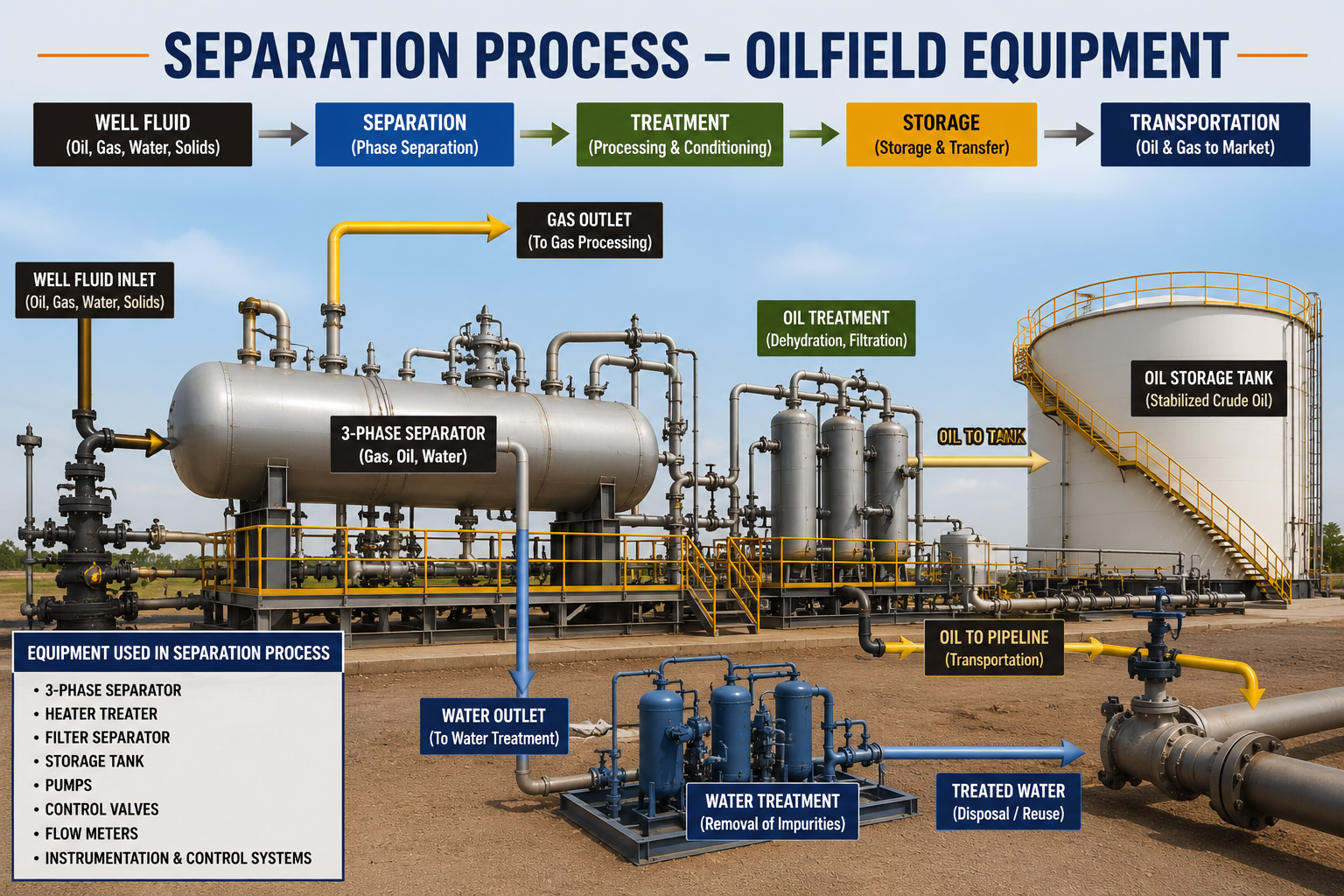
The first stage of the separation process begins when well fluid enters the separator vessel. A separator is a specially designed pressure vessel used to separate oil, gas, and water based on differences in density, pressure, and temperature.
In most oilfield facilities, two-phase or three-phase separators are commonly used. A two-phase separator separates gas from liquid, while a three-phase separator separates oil, gas, and water individually.
These systems help remove unwanted materials and prepare the crude oil for further processing and transportation.
Gas separated from the crude oil is sent to gas processing systems or flare systems, depending on operational requirements. The separated oil moves to treatment units where dehydration and filtration processes remove remaining water and impurities. Water extracted during the process is treated separately before disposal or reuse according to environmental regulations.